Peptimakecustom synthesis & low-MOQ contract manufacturing · by Pepti, GuangzhouPepti-RFQ
Inputs · outputs · owners

The Order Process, Step by Step

Every order, custom or private label, moves through the same nine steps. Each step lists what it needs, what it produces and who owns it, so a buyer always knows what is being waited for and on whom. Two steps need the buyer's sign-off; the rest are on the factory side.

01

Why the process is written down

Most friction between a buyer and a contract manufacturer is not about chemistry. It is about who is waiting for whom. A buyer thinks the clock is running while the factory is waiting for a label proof; the factory thinks the specification is final while the buyer is still deciding on a fill. Writing each step with its input, output and owner removes that ambiguity, and it makes the lead time honest: the typical 15 days for a custom lot, or the 3–7, 10–14 and 14–18 day tiers for catalogue lots, count from a precise moment, the confirmation of the specification and receipt of payment.

The steps below apply to both paths. A custom sequence passes through all nine. A private-label order of a catalogue compound skips most of the synthesis step, because the lot exists or is scheduled, and spends its time in fill, labelling and documents instead.

02

The nine steps

  1. Request for quote

    The buyer opens a Pepti-RFQ on WhatsApp or by email with the sequence or catalogue compound, the fill per vial, the quantity in kits, the labelling and the document list. A complete first message is the single biggest time saver in the whole process; the specification guide shows what complete looks like.

    Input

    Sequence or compound, fill, kit count, label, documents, destination

    Output

    Acknowledgement and any clarifying questions

    Who
    Buyer → Pepti sales desk
  2. Specification sheet

    The sales desk writes the request into a one-page specification sheet in the factory's format and returns it. This sheet is the contract for the lot: whatever is not on it is not in the order.

    Input

    RFQ content

    Output

    Draft specification sheet

    Who
    Pepti sales desk
  3. Feasibility and quote

    Production and QC review the sheet. For a custom sequence this covers length, coupling difficulty, modifications and purity target; for a catalogue compound it covers lot availability at the fill and the labelling scope. The written quote follows, with the expected lead time or tier.

    Input

    Draft specification

    Output

    Confirmed specification and written quote with lead time

    Who
    Pepti production and QC
  4. Buyer sign-off and payment

    The buyer confirms the specification sheet and pays. This is the first buyer sign-off and the moment the lead time starts. Changes after this point reopen the sheet and restart the clock for the affected part of the order.

    Input

    Confirmed specification, payment

    Output

    Production slot, lot code assigned

    Who
    Buyer sign-off · Pepti planning
  5. Label proof

    For private-label orders, packaging returns a proof with the lot-code position marked. This is the second buyer sign-off. Print waits for approval. Neutral-label orders skip this step.

    Input

    Print-ready artwork, template

    Output

    Approved proof

    Who
    Pepti packaging → Buyer sign-off
  6. Synthesis, purification and fill

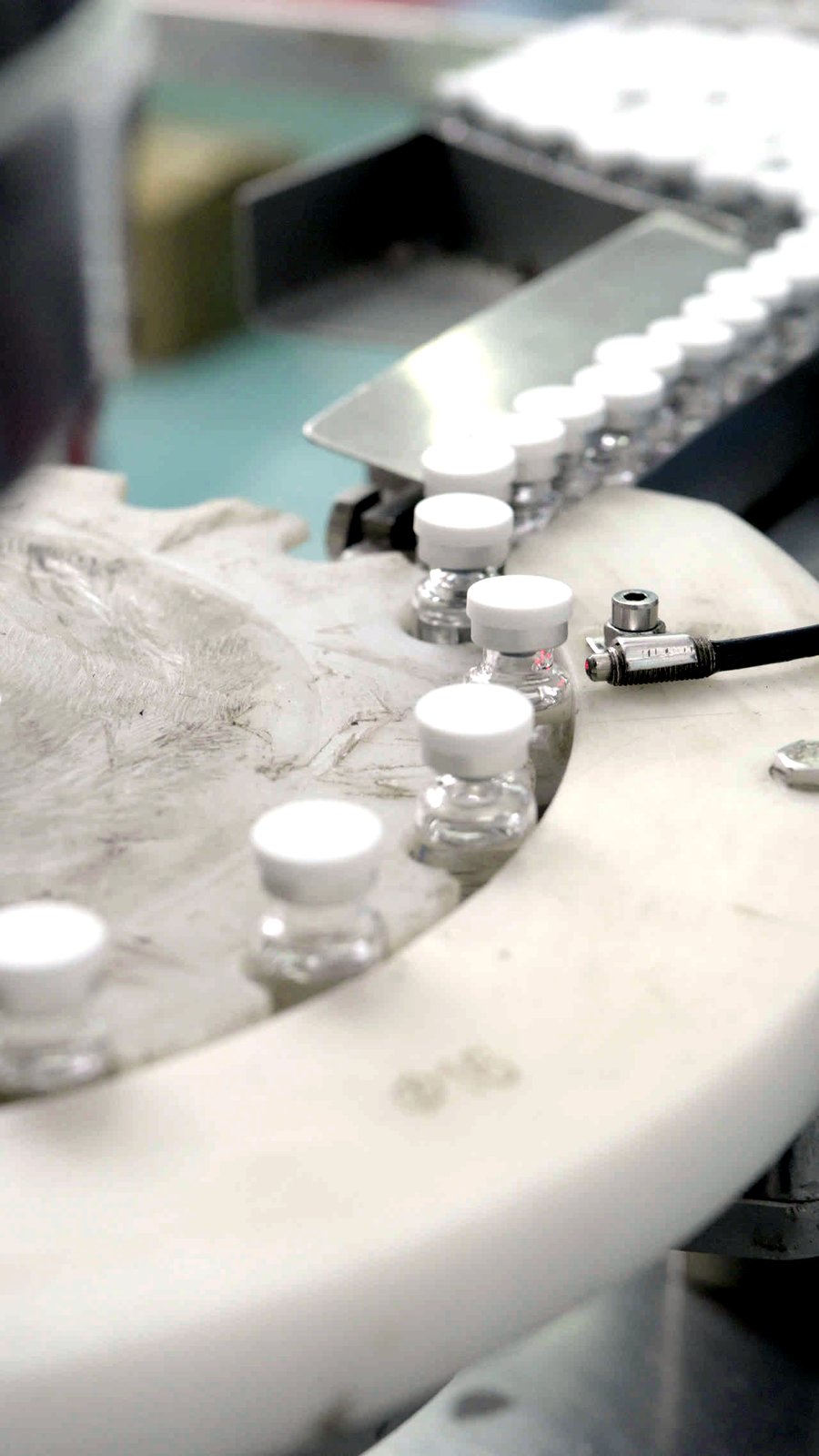
    Glass vials on the filling line turntable
    Filling line

    Custom: the sequence is assembled, cleaved, purified by preparative HPLC, checked by analytical HPLC and MS, then dispensed, freeze-dried and sealed. Catalogue: vials are filled from the allocated lot or a scheduled fill run, freeze-dried and sealed.

    Input

    Confirmed specification, lot code

    Output

    Sealed lyophilized vials with analytical data

    Who
    Pepti production
  7. Labelling and kitting

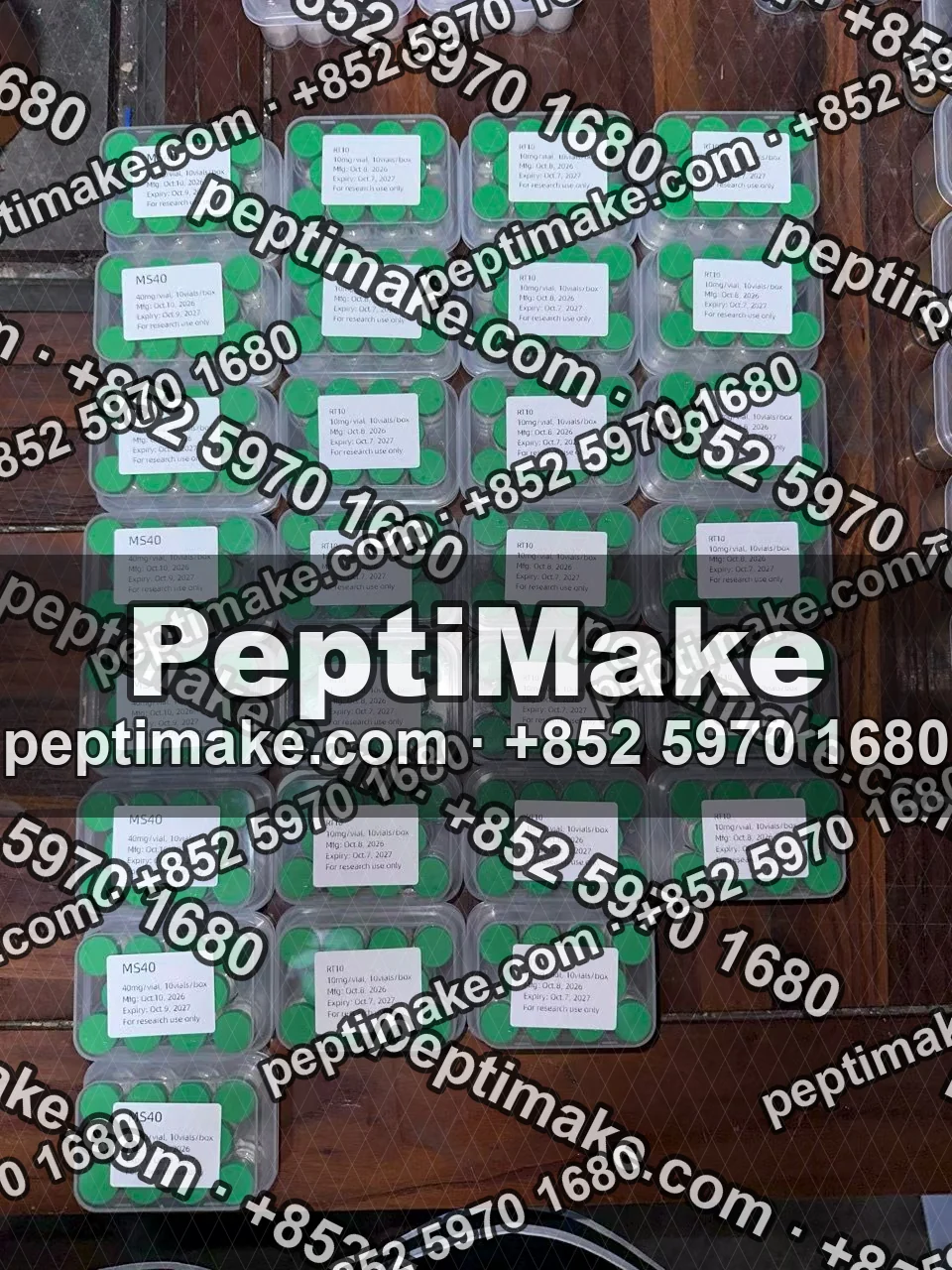
    Private-label kits with green artwork
    Private-label kits

    Vials are labelled with the approved proof or a neutral label carrying the lot code, and packed ten to a kit. Cartons and inserts are assembled if they are in the specification.

    Input

    Sealed vials, approved proof

    Output

    Labelled kits

    Who
    Pepti packaging
  8. Certificate and document set

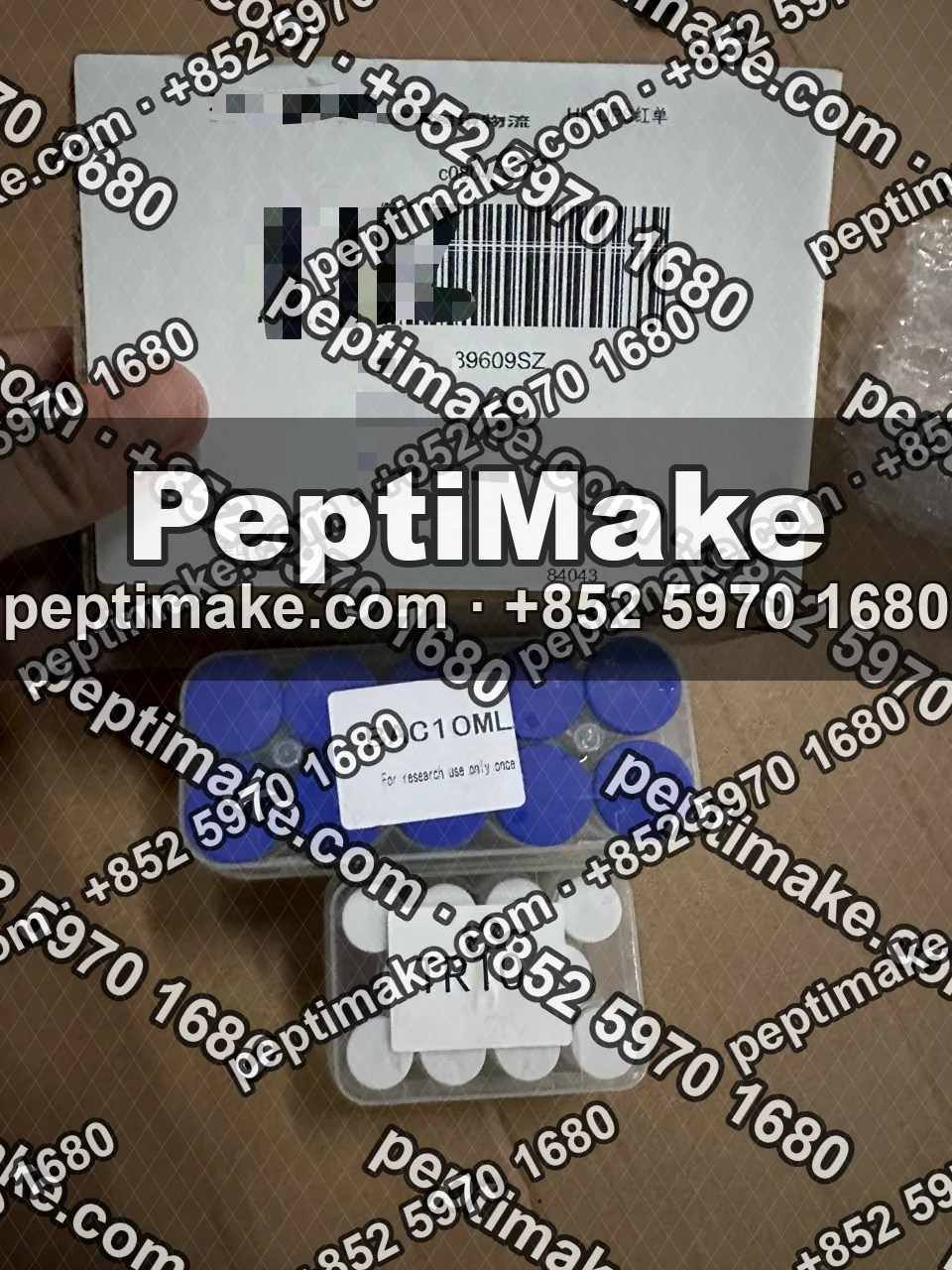
    Packing document laid on a kit, consignee masked
    Packing document, masked

    QC issues the batch Certificate of Analysis with the HPLC purity result and the MS identity result, and assembles the other documents written into the specification. The lot code on the certificate matches the vial label and the outer carton.

    Input

    Analytical data, specification document list

    Output

    Batch COA and document set

    Who
    Pepti QC
  9. Packing and shipment

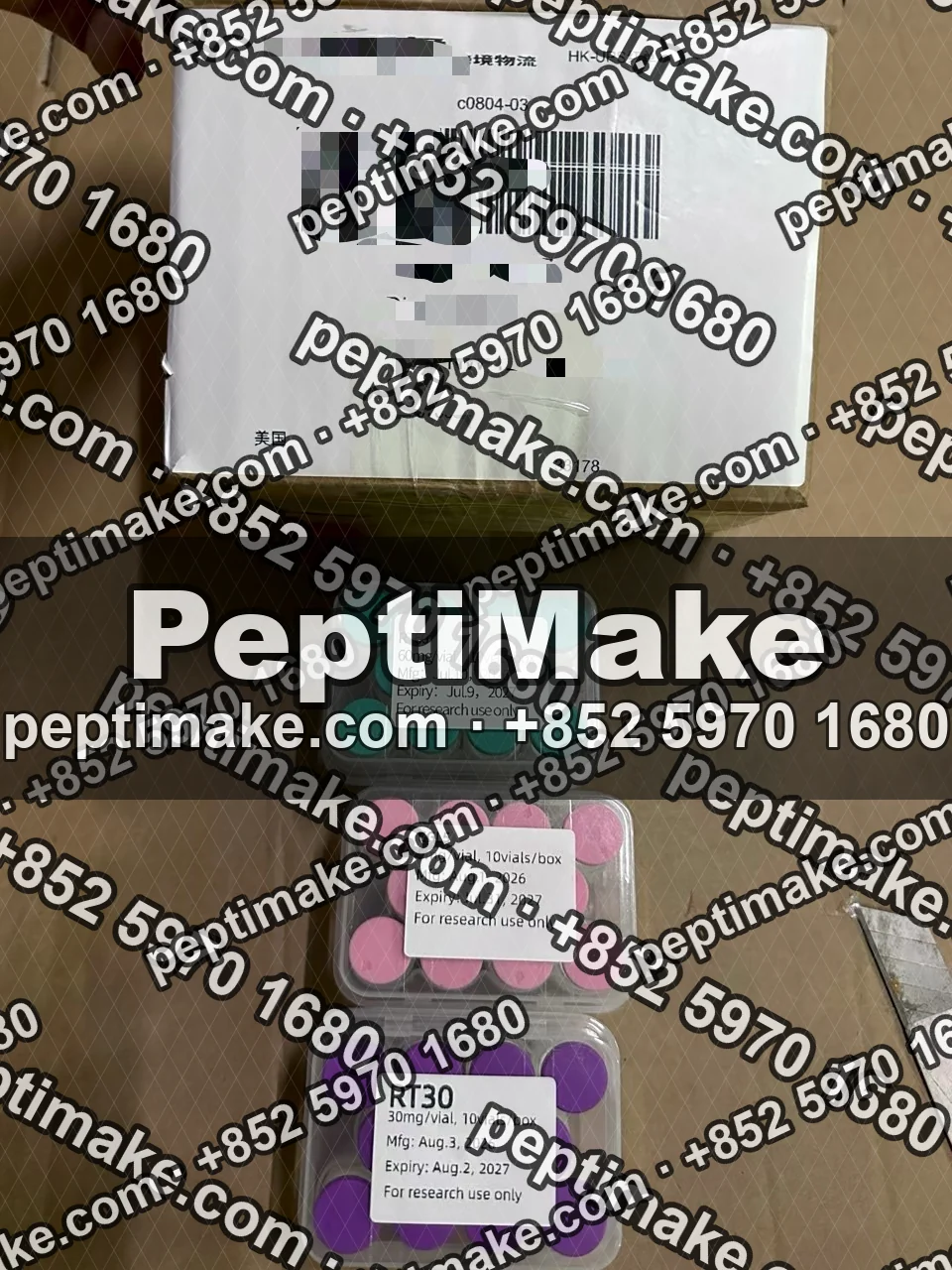
    Sealed carton with courier label, details masked
    Sealed carton

    Kits go into an insulated carton with ice packs. The courier collects, and the buyer receives the tracking reference with the document set. On arrival, the receiving checklist walks through matching lot codes and reading the certificate.

    Input

    Labelled kits, document set, destination

    Output

    Tracking reference, delivered lot

    Who
    Pepti logistics → Buyer
03

Where the time goes

The lead-time figures on this site describe steps six to nine. Steps one to five are bounded by how quickly the specification and proof are settled, and that is shared between buyer and factory. The table shows which side controls each step's duration.

StepDuration driven byHow to keep it short
Request for quoteCompleteness of the first messageSend all six specification fields and the destination in one message.
Specification sheetFactory turnaroundNothing needed from the buyer.
Feasibility and quoteSequence complexity, lot availabilityAvoid optional modifications unless needed; name the exact catalogue product and fill.
Buyer sign-off and paymentBuyerConfirm the sheet as written or send all changes at once.
Label proofBuyer approval, artwork qualitySend print-ready files to the template; approve or correct in one round.
Synthesis, purification and fillFactory; sequence length and purity targetSet in the specification; typically 15 days for custom lots including the steps that follow.
Labelling and kittingFactory; labelling scopeCartons and inserts add time; order them only if needed.
Certificate and documentsFactory QC; document listAsk for the documents you will actually check.
Packing and shipmentCourier and destinationGive a complete consignee and any import references with the order.
04

The two sign-offs

Sign-off 1 · the specification sheet

The sheet lists the sequence or compound, purity target, fill, kit count, label and documents. Confirming it fixes the lot. The lead time starts when it is confirmed and payment is received. A change after confirmation is handled as an amendment: the affected steps restart, and the quote may change.

Sign-off 2 · the label proof

For private-label orders only. The proof shows the artwork at template size with the lot-code position marked. Approving it releases print. A correction round is normal; several rounds are the most common reason a private-label order slips from the 3–7 day tier to the next one.

05

What stays on file

After shipment, the confirmed specification sheet, the approved proof and the lot certificate stay in the order file. A repeat order of the same configuration starts at step four, with a new lot code and a new certificate, and the buyer can compare the new certificate with the previous one line by line. For catalogue compounds the public COA library at peptioem.com/coa adds a third point of comparison, the published record of other lots of the same product.

Scope statement

Pepti does not present itself as a cGMP drug-substance (API) manufacturer or CDMO and does not publish a GMP certificate or DMF. Peptides on this site are supplied for research use by qualified B2B buyers. For research use only. Not for human or veterinary use.

FAQ

Questions buyers ask

When does the lead time start?

When the specification sheet is confirmed and payment is received (step four). The typical 15 days for a custom lot and the 3–7, 10–14 and 14–18 day tiers for catalogue lots all count from that moment. Time spent completing the specification or approving a proof is not included.

Which steps need something from me?

Three: the request for quote (step one), the specification sign-off with payment (step four) and, for private-label orders, the label proof approval (step five). Everything else is on the factory side.

Can I change the specification after confirming it?

Yes, as an amendment. The steps affected by the change restart, and the quote may change if the fill, quantity, purity target or labelling scope changed. Changes before confirmation cost nothing but time.

What happens if the feasibility review finds a problem?

The sales desk tells you in writing before you pay: for example a lead time longer than typical for a long sequence, a modification that needs confirmation, or a catalogue fill that is not on hand and moves the order to a later tier. You then confirm, adjust or withdraw.

Is the process the same for a sample kit?

A 1-kit sample of a catalogue compound follows the same steps with a neutral label and no proof round, so it usually sits in the fastest tier. It ships with its lot certificate like any other order.

Request a quote

Send a Pepti-RFQ for an order

Open WhatsApp with a pre-filled Pepti-RFQ message, or email the same details. A quote needs the compound or sequence, fill per vial, vial count, labelling and the document set you require.

  1. State the sequence or catalogue compound and the fill per vial.
  2. State the quantity in kits (1 kit = 10 vials) and the destination country.
  3. List the documents you need with the shipment.